Acoustic vs. Digital Piano: Which Is Right for Your Beginner?
Choosing between an acoustic and a digital piano shapes how a beginner develops their ear, their touch, and their relationship with the instrument from day…
September 12, 2026 · 5 min read
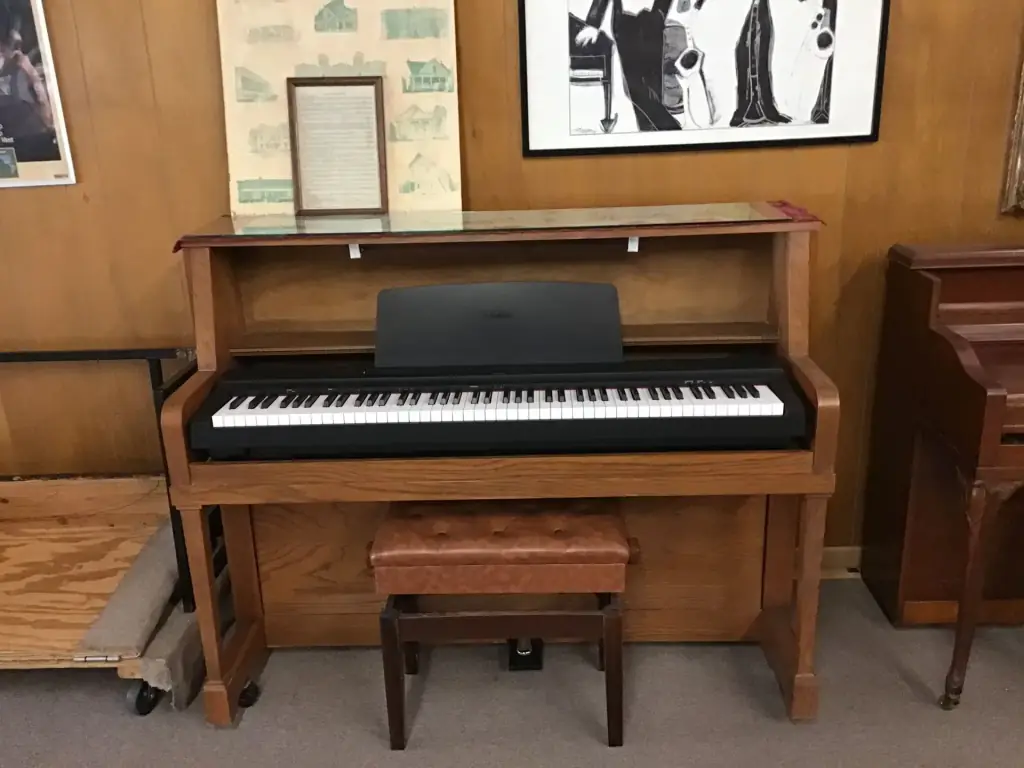
Key Takeaways
- Acoustic pianos develop touch sensitivity and tonal awareness faster, but require tuning, space, and higher upfront cost.
- Digital pianos offer headphone practice, consistent tuning, and portability — strong advantages for households with space or noise constraints.
- The best choice depends on the student's age, practice environment, household budget, and long-term musical goals.
Why the Acoustic vs. Digital Piano Question Matters for Beginners
Choosing between an acoustic and a digital piano shapes how a beginner develops their ear, their touch, and their relationship with the instrument from day one. This isn't a trivial purchasing decision — it directly influences practice habits, technique formation, and whether a student stays motivated through the early months.
Many parents assume the cheaper option is fine for a child who might quit after six months. That logic is understandable, but it overlooks a critical reality: a poor-quality instrument makes learning harder, not easier. A keyboard that doesn't respond to finger pressure the same way a real piano does will actually slow down a beginner's technical development and make the transition to a proper piano more difficult later.
The goal of this comparison isn't to declare a winner — it's to map the genuine strengths and limitations of each option against the specific circumstances of your household, your learner, and your long-term intentions.
The Case for an Acoustic Piano for Your Beginning Student
An acoustic piano — whether upright or grand — produces sound through hammers striking strings, which creates a physical feedback loop between the player's fingers and the instrument. That feedback is not decorative. It teaches a beginner how touch, weight, and speed affect tone in ways that no digital simulation fully replicates. Students who begin on acoustic instruments tend to develop a more nuanced sense of dynamics earlier.
The tonal richness of an acoustic piano also trains the ear differently. When a student plays a chord on an acoustic, they hear the natural resonance of strings vibrating together. That acoustic environment shapes musical listening skills over time — a genuine advantage for students who may pursue classical repertoire, music theory exams, or eventual conservatory study.
The practical downsides are real. Acoustic pianos require professional tuning two to four times per year, which carries an ongoing cost. They're heavy, often exceeding 300 pounds for an upright, and moving one requires professional movers. Apartment dwellers and families in noise-sensitive buildings may find acoustic practice genuinely impractical. And a quality entry-level upright from a reputable manufacturer typically starts around $3,000–$5,000 new, though the used market offers legitimate options at lower price points if the instrument is properly inspected before purchase.
Where Digital Pianos Outperform Acoustic for Beginners
A quality digital piano — not a basic keyboard — addresses several practical barriers that stop families from maintaining consistent practice. Headphone output is the most immediately useful feature: a student can practice at 10 p.m. without waking anyone. For households with younger siblings, shift-working parents, or shared walls, this alone can determine whether practice happens daily or sporadically.
Digital pianos never go out of tune. That consistency matters more than it sounds. A beginner developing their ear shouldn't be doing so on an instrument that drifts in pitch between tuning appointments. Many digital instruments also include built-in metronomes, recording functions, and lesson modes that reinforce what a teacher covers in lessons — tools an acoustic piano simply doesn't provide.
Weight and portability are secondary advantages. A quality digital piano typically weighs between 25 and 60 pounds, making it manageable for apartment moves or households that want flexibility. Entry-level quality digital pianos with weighted, graded hammer-action keys — the feature that most closely mimics acoustic key resistance — start around $500–$800 from manufacturers like Yamaha, Roland, and Kawai.
The important distinction here is between a digital piano and a basic unweighted keyboard. Unweighted keys don't build the finger strength or touch control that piano technique requires. Any digital instrument recommended for serious study should have fully weighted, graded hammer-action keys across all 88 keys.
Key Factors to Weigh Before Making the Decision
Four factors consistently determine which instrument fits a beginning student's situation: practice environment, budget (including ongoing costs), the student's age and goals, and household commitment to the instrument long-term.
Practice environment covers space and noise. A dedicated room where a child can practice without disturbing others favors an acoustic. A shared apartment, a small home, or a household with irregular schedules favors a digital. Neither answer is wrong — they're just honest assessments of what will actually enable daily practice.
Budget deserves a full-picture view. An acoustic piano's sticker price isn't the total cost: add tuning ($100–$200 per visit), occasional regulation and voicing work, and moving costs if the family relocates. A digital piano's cost is largely upfront, with minimal ongoing expense beyond an occasional pedal replacement. Over five years, the total cost of ownership can be surprisingly comparable between a mid-range digital and a used acoustic.
Student age and goals shape the decision at the edges. A six-year-old exploring music for enjoyment has different needs than a twelve-year-old with clear ambitions toward classical performance. The younger, more exploratory student may thrive on a quality digital. The older student with defined goals benefits from acoustic exposure as early as possible — particularly if classical grades, competitions, or conservatory auditions are on the horizon.
What Piano Teachers Typically Recommend for Beginners
Most experienced piano teachers hold a consistent position: a quality instrument matters more than the category. A well-maintained acoustic upright and a quality digital piano with graded hammer action are both acceptable starting points. A cheap, unweighted keyboard is not — regardless of price.
Teachers working with younger beginners in mixed household situations often recommend a quality digital as a starting instrument, with the expectation that the student transitions to acoustic within two to four years if they continue seriously. This staged approach reduces financial risk in the early years while preserving the option to move toward acoustic once the student's commitment is established.
For students showing early aptitude or strong interest in classical music, most teachers prefer acoustic from the start. The tactile and tonal differences compound over time, and habits formed on acoustic keys transfer more cleanly to performance instruments. Teachers who regularly prepare students for graded examinations or competitions often note that students who've trained exclusively on digital instruments need an adjustment period when performing on acoustic grand pianos — a period that's shorter when acoustic exposure begins earlier.
The acoustic vs. digital piano decision for a beginner comes down to honest answers about three things: where the instrument will live, what the household can sustain financially over five years, and how serious the student's musical goals are. A quality digital piano removes barriers that kill practice consistency — noise restrictions, tuning costs, space limits — and that consistency matters more in year one than instrument category. An acoustic piano builds tonal awareness and touch sensitivity that compound over years of serious study. Neither instrument is universally right. The right instrument is the one that gets played every day, on which a teacher can build real technique, and that the family can maintain without financial strain. Start with those constraints, match them to the options above, and the decision becomes straightforward.
Paul Hewitt Music Co., (318) 372-1449
Call (318) 372-1449More articles
Business Income Taxes: What Every Owner Must Know
Business income taxes are not a single, uniform system — they vary significantly depending on how a business is legally structured. A sole proprietor…
How Much Does a Piano Cost in Monroe, LA? (New vs. Used vs. Digital)
Piano prices span an enormous range — from a few hundred dollars for an entry-level digital keyboard to well over $100,000 for a hand-crafted concert grand.…